Nutrient Farm
Melon Galia (Organic)
Melon Galia (Organic)
No se pudo cargar la disponibilidad de retiro
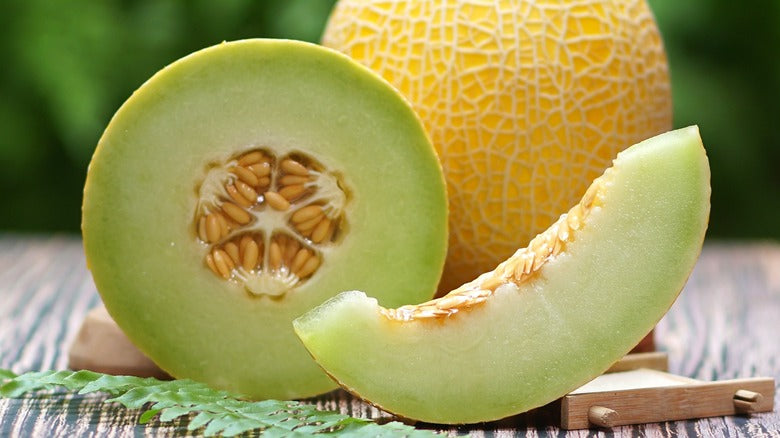
The Galia Melon is a sweet, aromatic muskmelon hybrid (*Cucumis melo*) developed in Israel in 1973 by breeder Dr. Zvi Karchi and named after his daughter. It is a cross of the green-fleshed ‘Ha’Ogen’ melon and the netted ‘Krymka’, so it is often described as combining traits of cantaloupe and honeydew.
It is typically round, about 2–3 pounds (roughly 1 kg), with a densely netted rind that starts green and turns golden-yellow to beige when ripe. The flesh is pale lime-green to creamy white—not orange like a typical U.S. cantaloupe—and surrounds a seed cavity.
Flavor is what people buy it for: high sugar (often 11–15° Brix, sometimes higher), juicy, and fragrant, with honeydew-like sweetness plus a musky, tropical, slightly floral or banana-like aroma. It is usually sweeter and more aromatic than a standard honeydew, with a texture that is tender but a bit firmer than honeydew.
**How to choose one:** Look for a golden-yellow rind (greener fruit is less ripe), a sweet smell at the stem or blossom end, and a fruit that feels heavy for its size and is firm with only slight give. Color and aroma matter more than pressing the stem the way you might with a cantaloupe. Whole fruit keeps at room temperature; once cut, wrap and refrigerate.
Nutritionally it is typical melon: low-calorie (~34–37 kcal per 100 g), high water, useful vitamin C, some potassium and fiber. Eat it chilled on its own, in fruit salads, with salt or chili, or with savory pairings like prosciutto.
It is grown commercially in warm regions (Spain, Israel, Morocco, Brazil, Central America, and greenhouse production in the southern U.S.). It needs heat, full sun, and well-drained soil; fruit is ready when the rind yellows and it slips or nearly slips from the vine.
Image is artwork only and is not exactly what the products will look like; actual images of products are coming soon.
Share