1
/
of
1
Nutrient Farm
Pomegranate
Pomegranate
Regular price
$1.79 USD
Regular price
$0.00 USD
Sale price
$1.79 USD
Shipping calculated at checkout.
Quantity
Couldn't load pickup availability
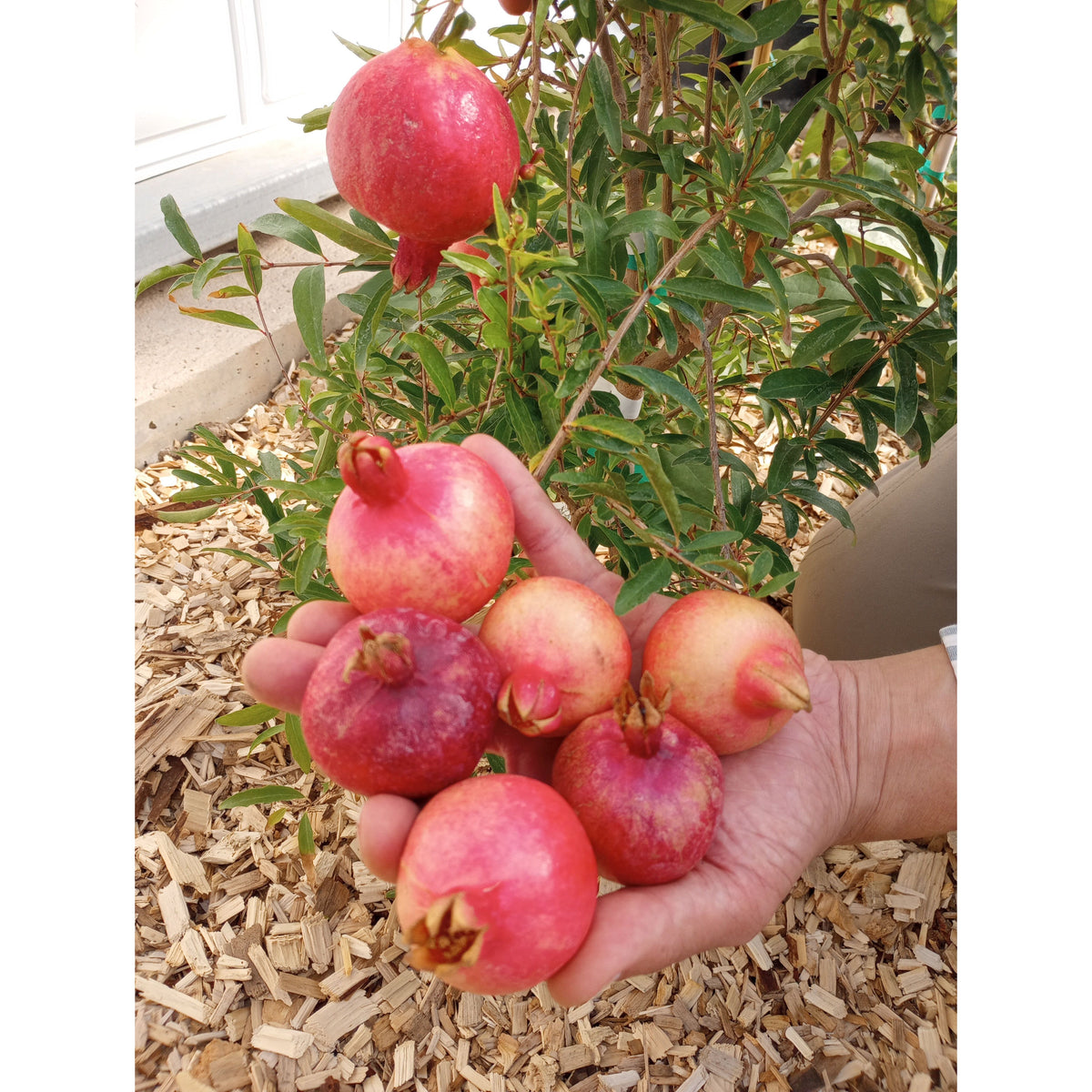
A pomegranate is a round, red fruit known for its tough outer skin and juicy, jewel-like seeds called arils. Here's a detailed description:
Physical Appearance
- Shape and Size: Pomegranates are roughly spherical, often slightly flattened at the top and bottom. They vary in size, similar to an apple or orange, but some can grow larger.
- Skin: The outer rind is thick, leathery, and usually a bright to deep red color, though it can also have hints of yellow or pink. The skin is not edible.
- Crown: At the top of the fruit, there's a small, crown-like structure formed by the remnants of the flower.
Inside the Pomegranate
- Arils: The edible part of the pomegranate consists of numerous arils, which are the juicy, seed-containing sacs. They are a vibrant red or pink, with a translucent, jelly-like exterior surrounding a crunchy seed.
- Arrangement: Arils are arranged in clusters, separated by thin, white membranes or pith that is bitter and not typically eaten.
- Flavor: The arils have a tart and sweet flavor, making them refreshing and slightly tangy. The seeds inside the arils are edible, adding a crunchy texture.
Nutritional and Culinary Uses
- Pomegranates are rich in antioxidants, vitamin C, fiber, and potassium, making them a popular choice for health-conscious diets.
- They are commonly eaten raw, added to salads, used as garnish, or juiced. Pomegranate juice is known for its deep, rich flavor and bright red color.
- Pomegranates are also used in cooking, particularly in Middle Eastern and Mediterranean cuisines, for sauces, syrups (like pomegranate molasses), and marinades.
Cultural and Symbolic Significance
- Pomegranates have historical and cultural significance, often symbolizing fertility, abundance, and prosperity in various cultures, including those of the Mediterranean, Middle East, and Asia.
- They are also featured in art, literature, and religious texts as symbols of beauty, life, and health.
Pomegranates are not only visually striking but also offer a unique combination of flavor and nutrition, making them a versatile fruit in both culinary and cultural contexts.
Share