Nutrient Farm
Pepper Hot Habanero (Organic)
Pepper Hot Habanero (Organic)
Couldn't load pickup availability
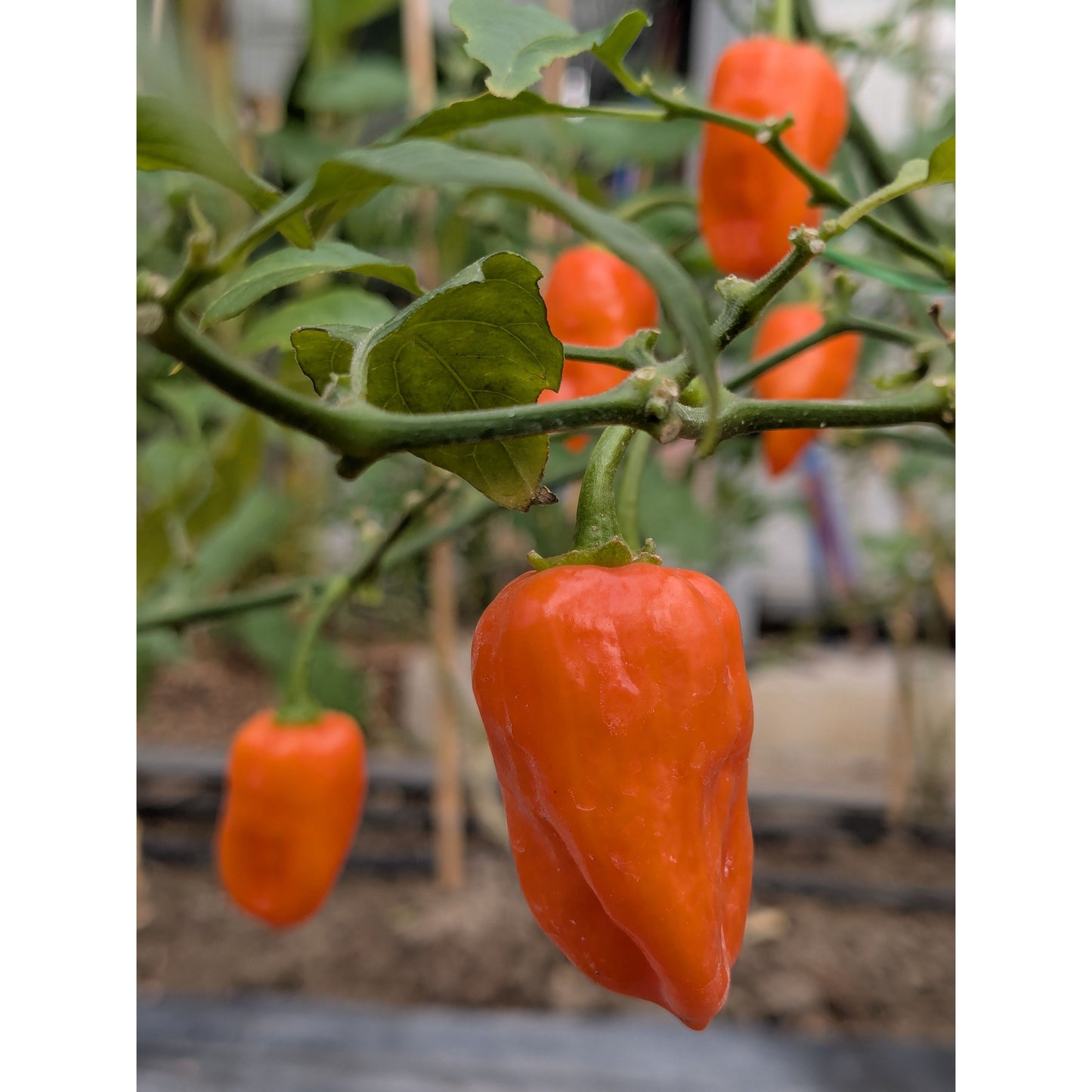
Habanero peppers (Capsicum chinense) are one of the most popular and intensely flavorful hot chili peppers in the world. They originated in the Amazon basin and are widely associated with Yucatán, Mexico, and the Caribbean.
They are small (typically 2–6 cm long), lantern- or heart-shaped, with a smooth-to-wrinkled skin. Unripe ones are green and ripen to vibrant colors. They deliver a complex profile: a initial fruity, floral, or slightly sweet note followed by a sharp, lingering heat.
Types/Varieties
Habaneros come in several colors and cultivars, with slight differences in flavor, shape, and heat:
- Orange Habanero — The most common grocery-store variety. Fruity (almost apricot-like), 100,000–350,000 SHU.
- Red Habanero (e.g., Caribbean Red) — Often hotter and slightly smokier or more vegetal, 300,000–445,000+ SHU.
- Chocolate (Brown/Black) Habanero — Earthier flavor, very hot (up to 425,000–577,000 SHU).
- Red Savina — A former world-record holder for heat (350,000–577,000 SHU).
- Other notables — White, yellow/golden, Scotch Bonnet (a close relative with similar heat but often flatter shape), Roatan Pumpkin, Peruvian White, etc.
Many hybrids exist for higher yields, specific colors, or tailored heat levels.
Heat Scale (Scoville Heat Units - SHU)
Habaneros rate as extra hot, typically 100,000–350,000 SHU, though some cultivars exceed 500,000 SHU. For comparison:
- Jalapeño: 2,500–8,000 SHU
- Cayenne: 30,000–50,000 SHU
- Ghost Pepper: 800,000–1,000,000+ SHU
The heat comes primarily from capsaicin concentrated in the placental tissue and seeds. Heat can vary by growing conditions, ripeness, and specific cultivar.
Culinary Uses
Habaneros shine in applications where their fruity aroma and intense heat can balance sweetness, acidity, or richness:
- Hot sauces and salsas (e.g., mango-habanero, pineapple-habanero).
- Caribbean and Mexican dishes: jerk marinades, Yucatán salsas, moles.
- Jams, jellies, chutneys, and fruit-based relishes (the sweetness complements tropical fruits).
- Spice rubs, powders, grilled meats, soups, curries, and cocktails.
- They pair especially well with mango, pineapple, lime, cilantro, and creamy or fatty foods to temper the heat.
Use sparingly—a little goes a long way. They are often roasted, blended, or dried for powders.
Nutritional Value
Habaneros are nutrient-dense despite their low calorie count. Per ~100g (raw):
- Calories: ~40 kcal
- Carbs: ~9–10g (including fiber ~3g and natural sugars)
- Protein: ~2g
- Fat: Negligible (~0.4g)
- Vitamin C: Extremely high (~215 mg, often 200–300%+ of daily value) — supports immunity and antioxidant protection.
- Vitamin A (from beta-carotene): Significant amounts (~40% DV), good for vision and skin.
- Other: Potassium (~140+ mg per smaller serving), Vitamin B6, Vitamin K, and various antioxidants/carotenoids.
Capsaicin offers potential benefits like metabolism boost (thermogenesis), pain relief, and anti-inflammatory effects, though individual tolerance varies.
They are low-fat, low-sugar (in context of a whole pepper), and add bold flavor with minimal calories.
Handling Caution
Habaneros are potent—handle with care to avoid "pepper burn":
- Wear gloves (nitrile or latex) when cutting, seeding, or handling, especially if you have sensitive skin.
- Avoid touching your eyes, face, nose, or genitals afterward.
- Work in a well-ventilated area; the fumes can irritate eyes and airways.
- Remove seeds and inner membranes (placenta) for milder heat, though some heat remains in the flesh.
- If you get capsaicin on skin: wash with soap, dish soap, or rubbing alcohol; for eyes/mouth, use milk or yogurt to soothe.
- Keep away from children and pets. Wash cutting boards, knives, and hands thoroughly.
- When cooking large batches, ventilation helps.
Dried or powdered forms can be even more concentrated. Start small when tasting or cooking.
Habaneros are a rewarding pepper for heat lovers, offering far more than just spiciness—they bring bright, tropical-like aromatics that elevate many dishes. If growing your own, they thrive in hot weather and produce well in containers. Enjoy responsibly!
Share