1
/
of
2
Nutrient Farm
Pepper Sweet Bell Colored (Organic)
Pepper Sweet Bell Colored (Organic)
Regular price
$1.00 USD
Regular price
Sale price
$1.00 USD
Shipping calculated at checkout.
Quantity
Couldn't load pickup availability
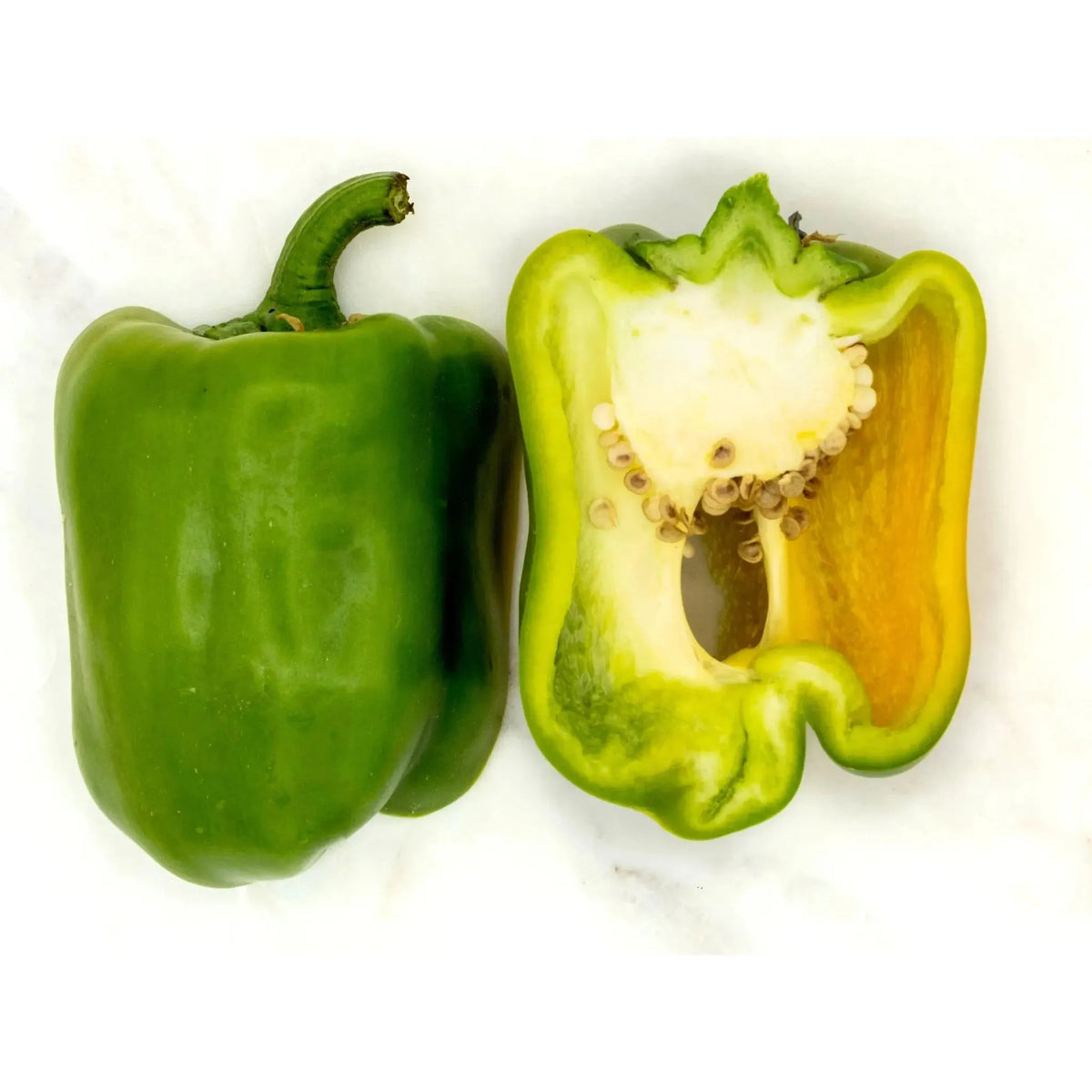
Bell sweet peppers (also called bell peppers, sweet peppers, or capsicums) are a popular, mild variety of Capsicum annuum. They are technically fruits (berries) but are used as vegetables in cooking.
Appearance
- Shape: Large, blocky or bell-shaped with 3–4 lobes, thick fleshy walls, and a glossy skin. They have a hollow interior with a cluster of white or yellowish seeds attached to the core.
- Size: Typically 3–5 inches (7–12 cm) long and wide.
- Colors: They start green when immature and ripen to red, yellow, orange, or other shades like purple, brown, or white depending on the variety. Green peppers are the least ripe; red ones stay on the vine longest and are sweetest.
Taste and Texture
- Flavor: Mild and sweet (no heat, 0 Scoville units) due to a recessive gene that prevents capsaicin production. Green peppers are slightly bitter and grassy; yellow/orange are fruity and tangy; red are the sweetest and most developed in flavor.
- Texture: Crisp and crunchy when raw; they soften and become sweeter when cooked.
Varieties and Colors
Common colors include:
- Green: Most common, affordable, slightly bitter.
- Red: Ripest, highest in nutrients and sweetness.
- Yellow/Orange: Sweet, vibrant.
- Others: Purple, brown, white, or striped varieties.
Nutrition
Bell peppers are low-calorie, nutrient-dense superfoods:
- High in vitamin C (e.g., one medium red pepper provides over 150–200% of daily needs).
- Good sources of vitamin A, B6, folate, fiber, potassium, and antioxidants like carotenoids (beta-carotene, lutein, capsanthin).
- Red peppers have more carotenoids and antioxidants than green.
Culinary Uses
- Raw: In salads, dips, crudités, or stuffed (e.g., with rice, meat, or cheese).
- Cooked: Roasted, grilled, stir-fried, sautéed, stuffed, or in fajitas, pizzas, soups, stews, and sauces. They add color, crunch, and sweetness.
- Other: Dried and ground into paprika (especially sweeter varieties).
Growing and Origin
Native to Central and South America (domesticated thousands of years ago), they were introduced to Europe by Christopher Columbus and spread globally. Plants are annuals (or perennials in warm climates) that prefer full sun, warm temperatures, and well-drained soil.
Share