Nutrient Farm
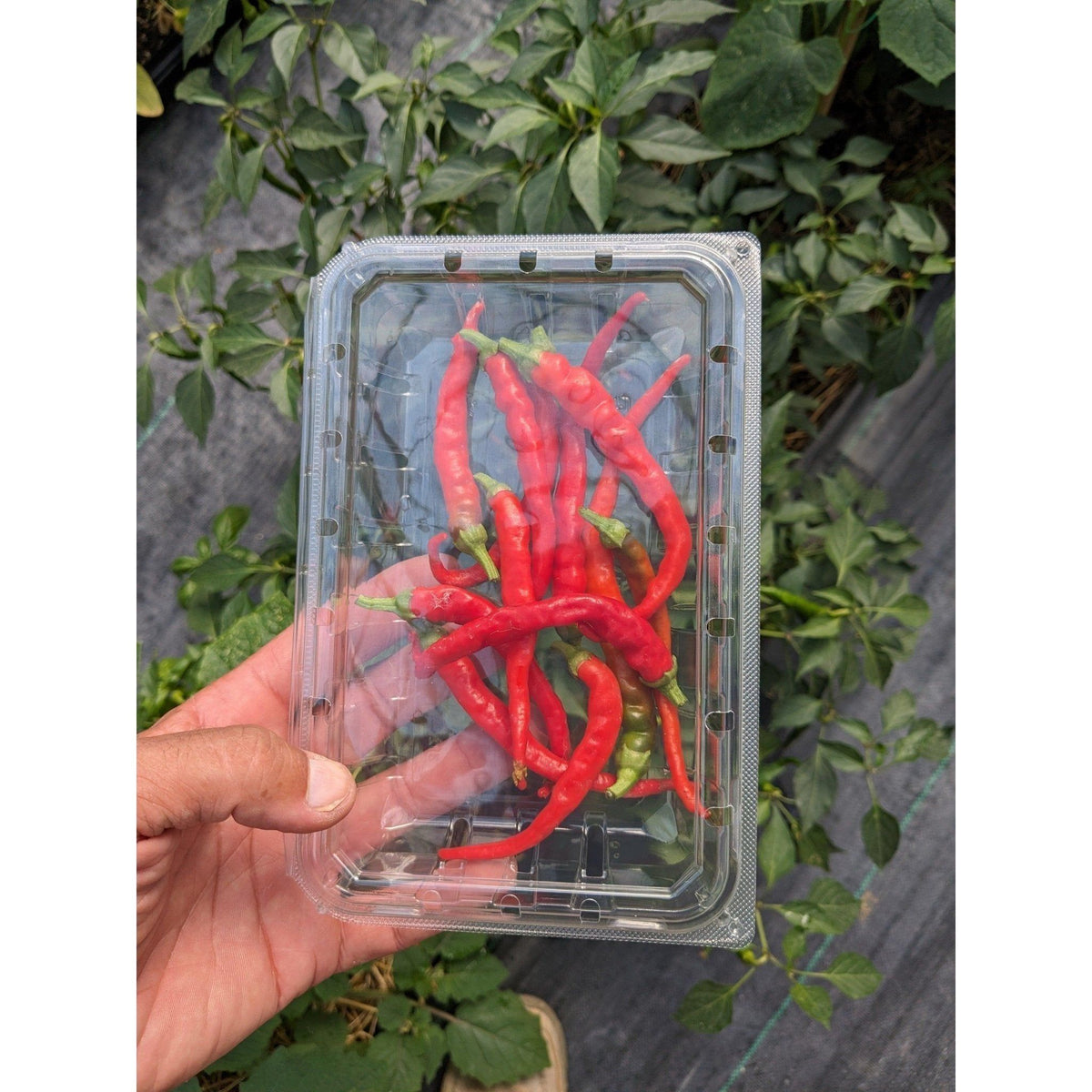
Pepper Hot Cayenne (Organic)
Pepper Hot Cayenne (Organic)
Couldn't load pickup availability
Cayenne hot peppers (Capsicum annuum) are a popular medium-hot chili pepper variety known for their bright red color, slender shape (typically 2–6 inches long and thin-walled), and versatile spicy kick. They originated in French Guiana (named after the city of Cayenne) and are widely used fresh, dried, or ground into powder.
Types/Varieties
There are several cultivars of cayenne peppers, with variations in pod length, thickness, heat level, and ripening time:
- Common/Long Red Slim Cayenne: Standard variety, thin and wrinkled pods, 30,000–50,000 SHU.
- Joe's Long Cayenne: Longer pods, good for drying.
- Carolina Cayenne and Charleston Hot: Hotter variants, often reaching 50,000–100,000+ SHU.
- Other types include Red Ember, Red Flame, Ring of Fire (spicier around 50,000 SHU), Large Red Thick, and Buena Mulata.
They are usually harvested when fully red for maximum flavor and heat.
Heat Scale
Cayenne peppers rate 30,000–50,000 Scoville Heat Units (SHU) on the Scoville scale (median around 40,000 SHU), placing them in the medium-hot category.
- For comparison: About 4–20 times hotter than a jalapeño (2,500–8,000 SHU), similar to Tabasco peppers, and milder than Thai chilies (50,000–100,000 SHU) or superhots like habaneros/ghost peppers (100,000+ SHU).
- The heat comes primarily from capsaicin and related compounds concentrated in the inner membranes and seeds. They deliver a sharp, lingering burn that is intense but tolerable for many people when used in moderation.
Culinary Uses
Cayenne peppers offer a neutral, earthy, slightly smoky, and pungent flavor that enhances dishes without overpowering other ingredients. They are highly versatile:
- Fresh: Chopped or sliced into salsas, stir-fries, soups, stews, or hot sauces.
- Dried/Ground: The most common form (cayenne pepper powder or flakes) used in chili powder blends, rubs for meats, BBQ sauces, marinades, eggs, vegetables, and Creole/Cajun dishes like gumbo.
- Popular in international cuisines for adding heat to curries, pizzas, pastas, and even some sweet dishes (e.g., chocolate or baked goods for contrast).
They pair well with garlic, tomatoes, vinegar, cumin, and herbs. Start with small amounts, as a little goes a long way.
Nutritional Value
Cayenne peppers (and their ground form) are nutrient-dense, low-calorie sources of antioxidants, vitamins, and minerals. Values vary slightly between fresh and dried forms (dried is more concentrated).
Per 100g dried/ground cayenne (approximate):
- Calories: ~318
- Protein: ~12g
- Carbs: ~57g (high in fiber ~27g)
- Fat: ~17g
- Rich in: Vitamin A (very high, over 200% DV), Vitamin C, Vitamin E, Vitamin K, B vitamins (e.g., B6, niacin), potassium (~2,000mg), iron, and antioxidants like capsaicinoids and carotenoids.
Fresh peppers (e.g., per typical serving or ~45g red chili) provide notable Vitamin C (~72% DV), provitamin A, and fiber with far fewer calories.
Potential benefits (supported by studies, though not a cure-all): May aid metabolism, circulation, pain relief (topical capsaicin), and provide anti-inflammatory/antioxidant effects.
Handling Caution
Cayenne peppers contain capsaicin, which can cause significant irritation:
- Wear gloves (especially when handling large quantities or cutting) to avoid "chili hands" — burning sensation on skin that can last hours.
- Avoid touching eyes, nose, mouth, or sensitive areas after handling.
- Wash hands, tools, and surfaces thoroughly with soap (or use oil/dairy to neutralize capsaicin).
- Seeds and membranes are the hottest parts — remove them for milder heat.
- Sensitive individuals or those with gastrointestinal issues should use caution, as excessive amounts can cause stomach upset.
Store fresh peppers in the fridge (up to a week) or freeze/dry for longer use. Ground cayenne keeps well in a cool, dark place.
Cayenne is a kitchen staple for adding reliable heat and flavor—perfect for home cooks, including those on farms or experimenting with fresh produce! If you're growing them or using them in recipes, let me know for more tailored advice.
Share